.png)
The Truth About Seed Oils in Restaurants: Why Malbec Grill Chooses Pure Olive Oil
- nataliamira
- 4 days ago
- 13 min read
What if the "healthy" choice you made at dinner last night was actually fueling inflammation with every bite? It is a frustrating reality that even when you seek out a premium dining experience, industrial seed oils often hide behind the curtain of gourmet descriptions. Finding a restaurant with no seed oils feels like searching for a needle in a haystack, especially when you value transparency as much as taste. You shouldn't have to choose between a sophisticated evening out and your metabolic health. The sizzle of a hand-cut Churrasco on a traditional Parrilla should be a song of pure flavor, not a chemical compromise.
We understand that skepticism. You deserve to know exactly what touches your food before it reaches your plate. This article reveals why most kitchens rely on processed fats and how Malbec Grill, our scratch-made Argentine kitchen in Parkland, prioritizes your well-being without compromising an ounce of flavor. We will take you behind the scenes of our culinary philosophy, exploring the risks of high-PUFA oils and why our commitment to pure olive oil is the cornerstone of our menu. Prepare to discover how you can finally enjoy a premium steak dinner with total peace of mind and no digestive concerns.
Table of Contents
What are Seed Oils and Why are They in Every Restaurant?
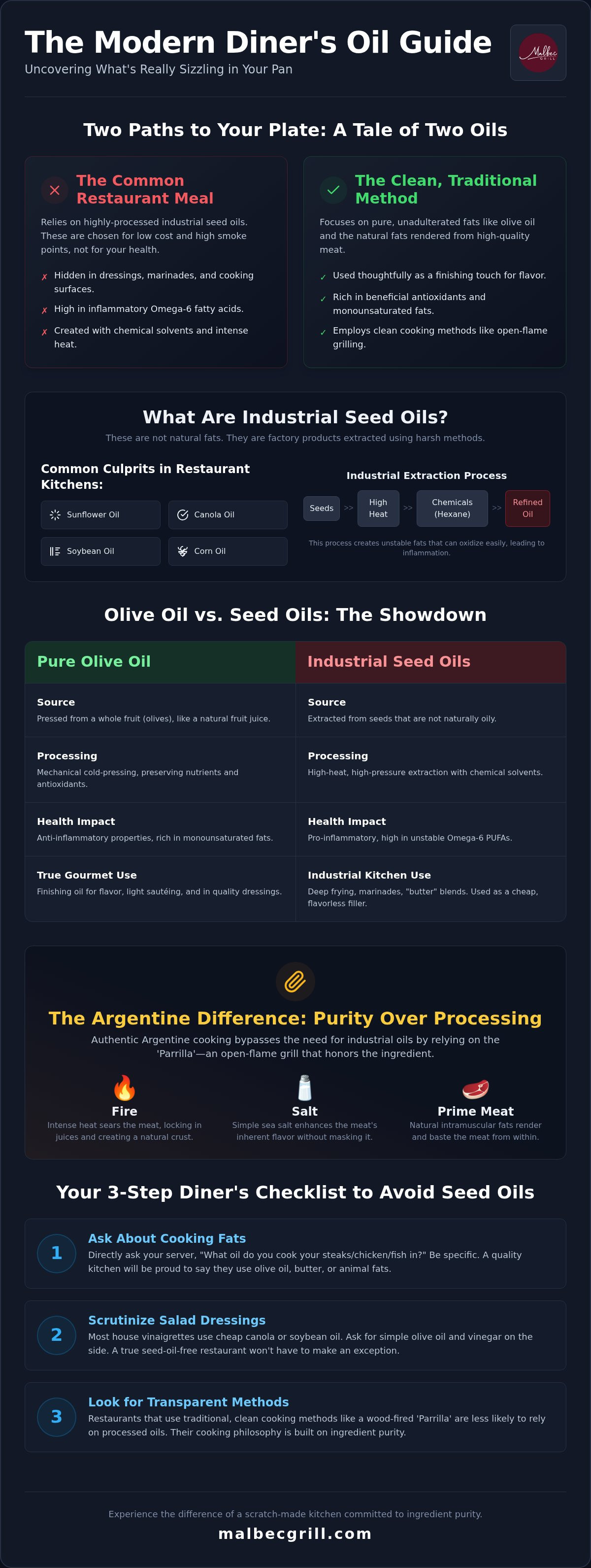
Seed oils are the invisible architects of the modern restaurant industry. Unlike olive oil, which is essentially fruit juice pressed from a sun-ripened tree, oils like canola, soybean, corn, and sunflower are industrial products. They don't exist in nature in a liquid state. These oils require heavy machinery, chemical solvents like hexane, and intense heat to be extracted from their sources. Finding a restaurant with no seed oils is difficult because these fats became the culinary standard for two simple reasons: they are incredibly cheap and they have high smoke points that make them easy for busy line cooks to manage.
The rise of these oils began in the mid-20th century, pushed by a narrative that polyunsaturated fats (PUFAs) were "heart healthy" alternatives to traditional animal fats. By 2026, that story has changed. Modern nutritional science now highlights how these unstable fats oxidize easily, creating a cycle of inflammation in the body. Despite this, most commercial kitchens remain tethered to them. These oils are rarely listed on the menu; they hide in the "butter" brushed on your steak, the marinade for your chicken, and the base of almost every house-made vinaigrette.
The Hidden Cost of Cheap Industrial Oils
Profit dictates the menu in most establishments. While premium olive oil requires gentle harvesting and careful pressing, industrial alternatives are born in factories through intense chemical refinement. This high-heat processing creates inflammatory byproducts before the bottle even reaches the kitchen. When these oils are heated again in a restaurant's sauté pan, they break down further. The result is a diet dangerously high in Omega-6 fatty acids, which can disrupt your body's natural balance. Most kitchens prioritize their bottom line over ingredient purity, choosing a neutral, flavorless oil that lasts forever on a shelf but offers nothing to your health.
Common Seed Oils Found in South Florida Eateries
If you dine out in Parkland or Coconut Creek, you will likely encounter "vegetable oil." It sounds natural, but it is actually a catch-all term for highly processed soybean or corn oil. Many upscale spots claim to use olive oil but actually stock "Pomace oil." This is the lowest grade of olive oil, extracted from the leftover pulp using chemical solvents. It lacks the antioxidants of the real thing. Even at a restaurant with no seed oils, you must be vigilant about salad dressings. Most "healthy" vinaigrettes are built on a base of canola oil because it stays liquid in the fridge, unlike pure olive oil which naturally solidifies when cold.
The Argentine Difference: Traditional Grilling vs. Modern Processing
In the heart of Argentina, the kitchen is a temple of simplicity. While modern commercial kitchens often rely on a cocktail of processed liquids to keep food from sticking or to mask inferior ingredients, the authentic Argentine way is a celebration of purity. It is a philosophy where the ingredient is the star and the method is the conduit. This tradition relies on the synergy of fire, salt, and the natural juices of premium beef. It's a stark contrast to the standard American model that has spent decades normalizing the use of industrial fats. For those seeking a restaurant with no seed oils, the traditional Parrilla offers a sanctuary of clean, intentional cooking.
Argentine culture has long favored olive oil for its aromatic qualities and health benefits, using it as a finishing touch for cold preparations or for light, controlled sautéing. We don't view oil as a cheap commodity to be hidden in every dish. Instead, it's a premium ingredient that must complement the natural profile of the food. This alignment of traditional "scratch-made" values with the modern desire for clean eating is what sets authentic Argentine cuisine apart from the processed "gourmet" food found in many contemporary South Florida eateries.
Similarly, the Middle Eastern traditions found at Beirut Grill demonstrate how ancestral cooking methods and the use of pure, high-quality oils can create a menu that is both indulgent and health-conscious, offering a global perspective on the movement toward seed-oil-free dining.
In a similar vein, those seeking traditional flavors prepared with care can look to the Best Indian Food in Hayward, CA | Favorite Indian Restaurant | Indian Food near me, which emphasizes authentic culinary experiences through its extensive buffet offerings and commitment to quality.
The Power of the Parrilla
The Parrilla, or open-flame grill, is the ultimate tool for clean cooking. When a prime cut of meat meets the intense heat of the wood-fired flames, a beautiful process occurs. The natural intramuscular fats begin to render, basting the meat from within. There is no need for a coating of soybean oil or a "butter blend" to create a crust. The Churrasco, our signature Skirt Steak, is the perfect example of this. Its rich marbling provides all the moisture and flavor required, requiring only a touch of sea salt and the kiss of the flame to reach perfection. This primal method ensures that the flavor you taste is the beef itself, not a byproduct of a processing plant.
Why Malbec Grill Rejects the 'Standard' Kitchen Model
Choosing to be a restaurant with no seed oils isn't just a health trend for us; it's a return to our roots. Most restaurants adopt seed oils because they're invisible, flavorless, and cheap. We believe that every ingredient should earn its place on the plate. Our commitment to a scratch made kitchen Parkland means we have total oversight of every drop of oil used. As a family-owned establishment with over 25 years of expertise, we don't answer to corporate profit margins that demand cost-cutting at the expense of quality.
We use premium olive oil as a deliberate flavor enhancer in our handmade empanadas and fresh dressings, rather than a mere industrial lubricant. This meticulous attention to detail allows us to bridge the gap between traditional Argentine heritage and the modern South Florida diner's desire for clean, anti-inflammatory meals. If you are ready to experience the difference that authentic grilling makes, we invite you to explore our Parrilla menu and taste the purity of fire and salt.
Olive Oil vs. Seed Oils: A Myth-Busting Comparison for 2026
A persistent myth whispered in culinary circles suggests that olive oil is too delicate for the searing heat of a professional kitchen. This narrative has conveniently served the industrial oil industry for decades, pushing refined canola and soybean oils into the spotlight under the guise of "versatility." As we embrace the health-conscious standards of 2026, the truth is finally surfacing. At a restaurant with no seed oils, the choice of fat is a deliberate act of quality control rather than a cost-saving measure. While seed oils are chemically stripped and deodorized to be "blank" and flavorless, premium olive oil is a vibrant, living ingredient. It brings its own aromatic complexity to the plate, perfectly complementing the earthy, sun-drenched notes of Argentine herbs like oregano and parsley found in a fresh chimichurri.
The fundamental difference lies in the extraction. Seed oils are born in factories through high-heat processing and chemical solvents, leaving them prone to rapid oxidation. Olive oil is essentially a fruit juice, pressed from the heart of the olive and bottled with its natural defenses intact. This makes it a partner in the kitchen, not just a lubricant for the pan. When you taste a dish prepared with pure olive oil, you aren't just avoiding inflammation; you are experiencing a depth of flavor that industrial fats simply cannot replicate.
Smoke Points and Stability: Setting the Record Straight
The obsession with a raw "smoke point" often misses the most critical factor in professional cooking: oxidative stability. A refined seed oil might reach a high temperature before it smokes, but it begins to break down into inflammatory polar compounds long before that point because it lacks natural antioxidants. In contrast, high-quality extra virgin olive oil is naturally fortified with polyphenols. These compounds act as a protective shield, preventing the oil from oxidizing even under the intense conditions of a busy service. Olive oil is the superior choice for a steakhouse kitchen because its high oxidative stability ensures that the intense heat of the grill preserves flavor rather than destroying it.
Nutritional Density in Every Bite
The chemical structure of the fat you consume dictates how your body processes it. Seed oils are overwhelmingly composed of polyunsaturated fats (PUFAs), which are highly reactive and fragile. When you choose a restaurant with no seed oils, you are prioritizing monounsaturated fats (MUFAs). These are the stable, heart-healthy fats that provide a clean source of energy without the heavy, "greasy" feeling often associated with standard restaurant meals. This choice ripples through the entire dining experience, from how the food feels on your palate to how you feel the next morning.
Stability: Monounsaturated fats remain resilient during the cooking process, avoiding the creation of toxic byproducts.
Antioxidants: The polyphenols in olive oil help the body manage oxidative stress and inflammation.
Digestive Ease: Avoiding highly processed industrial fats reduces the likelihood of digestive discomfort and metabolic sluggishness.
Preservation: Scratch-made cooking with fresh fats preserves the delicate, fat-soluble vitamins found in our seasonal vegetables.
How to Spot a 'Seed Oil Free' Restaurant: A Diner's Checklist
Finding a restaurant with no seed oils shouldn't require a background in food science or a confrontational attitude at the table. Most establishments don't broadcast their choice of cooking fats on the front page of the menu, so the responsibility often falls on the diner to peek behind the culinary curtain. It is a delicate dance of asking the right questions and observing the subtle signs of a kitchen that values ingredient purity over industrial convenience. When you walk into a dining room, you are looking for transparency and a commitment to tradition that transcends the modern reliance on cheap, processed additives.
The House Oil: Always ask what oil is used for sautéing and in house dressings. If the answer is "vegetable oil" or a "blend," it almost certainly contains soybean or canola oil.
The Butter Deception: Many kitchens brush steaks with a "butter blend" that is actually margarine mixed with seed oils. Insist on 100% real butter or pure olive oil.
The Deep Fryer Trap: Deep fryers are the primary home of industrial fats. Unless a restaurant specifically uses tallow or lard, assume the fried items are cooked in high-PUFA oils.
Menu Focus: Prioritize steakhouses that focus on premium, high-quality cuts. A kitchen that invests in top-tier beef is far more likely to respect that investment by using superior cooking fats.
Scratch-Made Verification: Truly "scratch-made" means no pre-packaged bags of pre-cut vegetables or pre-mixed sauces, which are notorious hiding spots for preservatives and seed oils.
Questions to Ask Your Server
You can inquire about cooking fats without feeling like a difficult guest. A simple, polite question like, "I have a sensitivity to seed oils; does the chef use pure olive oil or butter for sautéing?" usually does the trick. A red flag is a server who seems confused by the question or offers a vague "we use a healthy blend" response. In the professional kitchen world, a "blend" is almost always a cost-saving measure that dilutes a small amount of olive oil with a large volume of refined seed oil. Ingredient transparency is the hallmark of a confident, high-quality establishment.
Identifying Authentic Scratch-Made Kitchens
An authentic scratch-made kitchen is a hive of activity where whole ingredients are transformed daily. Look for a focused menu. A massive, ten-page list of generic dishes often indicates a reliance on pre-prepared, industrial components. When a menu is limited and intentional, it shows the chef has total control over every element. This level of care is why we are often cited as the best value steakhouse South Florida diners can trust for both quality and price. We believe that health and gourmet flavor are not mutually exclusive. If you're ready to experience a meal where every drop of oil is chosen with your well-being in mind, book your table at Malbec Grill today and taste the difference of a truly clean kitchen.
Malbec Grill: Parkland’s Destination for Clean, Argentine Dining
Malbec Grill stands as more than just a destination for a world-class steak; it's a sanctuary for those who believe that dining out should nourish the body as much as it delights the soul. By operating as a restaurant with no seed oils, we've removed the invisible barrier between gourmet indulgence and metabolic health. Our philosophy is anchored in a 100% scratch-made approach, where every sauce, marinade, and side dish is crafted under our roof. We don't hide behind industrial shortcuts. We believe that premium ingredients speak for themselves through the golden hue of pure olive oil and the honest aroma of the wood-fire. When you choose our signature Churrasco or the expansive Malbec Platter, you're tasting the result of a kitchen that values purity above all else.
Cutting corners on oil might save a few dollars in the short term, but it costs the guest their long-term well-being. We refuse that trade-off. Our commitment to using only premium olive oil and fresh ingredients ensures that every bite is as clean as it is flavorful. It's a rare standard in the modern dining scene, but for our family, it's the only way to cook. You can taste the difference in the crispness of our empanadas and the succulent finish of our Parrilla-grilled meats, all prepared without a single drop of inflammatory seed oil.
While our focus remains on the Argentine tradition, we admire any culinary style that celebrates ingredient integrity; for example, you can explore japanise teppinaki to see how premium proteins are prepared with similar precision and care in an authentic setting.
From Our Family to Your Table
Our owners bring a 25-year legacy of service to the Parkland and West Boca community. This isn't just a business; it's an extension of our home. We maintain a strict "no seed oil" policy because we only serve food we'd feel proud to feed our own children. This deep-rooted sense of responsibility drives our total transparency. Our kitchen is an open book. We invite you to ask us anything about our ingredients or our methods because we have nothing to hide. This trust is the foundation of every relationship we build with our guests, ensuring you can dine with absolute confidence.
Visit Us in Parkland and Coconut Creek
Experience the profound difference of olive-oil-based Argentine cuisine for yourself. Whether you're joining us for a celebratory dinner or a casual lunch, you'll feel the lightness and vitality that comes from avoiding processed fats. For those looking to explore our menu, our 2x40 couples special offers a perfect opportunity to enjoy premium, clean dining at an exceptional value. It's time to rediscover the joy of a meal that feels as good as it tastes. We invite you to join our family for an evening of fire, salt, and tradition. Book your table at Malbec Grill today and see why we're the premier restaurant with no seed oils in South Florida.
Embrace the Purity of the Argentine Table
Choosing a meal shouldn't feel like a compromise between your health and your palate. We've explored how industrial seed oils have quietly dominated modern kitchens; yet, we've also seen how the traditional Argentine Parrilla offers a cleaner, more vibrant path forward. By prioritizing pure olive oil and a 100% scratch-made philosophy, you can finally enjoy the rich, smoky flavors of a premium steak without the hidden inflammatory costs. These traditional methods prove that the most delicious meals are often the simplest ones.
Our family-owned kitchen in Parkland brings over 25 years of culinary expertise to your plate, ensuring that every hand-cut Churrasco is a testament to quality. Finding a restaurant with no seed oils allows you to reclaim the joy of dining out, knowing that your well-being is respected by every member of our team. We invite you to sit at our table, breathe in the aroma of the wood-fire, and rediscover how incredible real food can feel. Your journey toward a cleaner, more authentic dining experience starts with a single flame.
Experience the pure taste of Argentine grilling: Book your table at Malbec Grill
Frequently Asked Questions
Does Malbec Grill use any vegetable or canola oil in their cooking?
Malbec Grill strictly prohibits the use of vegetable, canola, or any other industrial seed oils in our kitchen. We rely exclusively on premium olive oil and the natural fats found in our high-quality proteins. This commitment ensures that every dish remains free from the inflammatory byproducts associated with chemically refined oils, allowing the true flavors of our Argentine heritage to shine through every bite.
Is it possible to eat at a steakhouse if I am on a strict no-seed-oil diet?
You can absolutely enjoy a steakhouse dinner while maintaining a strict no-seed-oil diet by choosing a dedicated restaurant with no seed oils like Malbec Grill. While many traditional steakhouses brush their meats with "butter blends" containing soybean oil, we use only pure fats and traditional Argentine grilling methods. Our transparency gives you the peace of mind to enjoy a premium meal without hidden industrial additives.
Why is olive oil better than seed oils for grilling steaks?
Olive oil is superior because its high oxidative stability and natural antioxidants protect the meat's integrity under the intense heat of the Parrilla. Unlike seed oils that break down into toxic compounds when exposed to fire, olive oil remains stable and resilient. It also adds a subtle, fruity depth that complements the rich char of a premium steak, rather than leaving a greasy, chemical film.
Are the empanadas at Malbec Grill made without seed oils?
Yes, our handmade empanadas are prepared entirely without industrial seed oils. We use traditional recipes that prioritize fresh ingredients and pure olive oil for both the dough and the savory fillings. This scratch-made approach ensures that even our appetizers align with your clean-eating goals, providing a light and crisp texture that is much easier on your digestive system than commercially fried alternatives.
What is the best dish for someone looking for a high-protein, clean-fat meal?
The Churrasco, or Skirt Steak, is an exceptional choice for anyone seeking a high-protein meal with clean, natural fats. This signature cut is traditionally grilled over an open flame, allowing its own marbled fats to render perfectly without the need for added industrial lubricants. Pair it with a fresh side of grilled vegetables for a nutrient-dense dining experience that leaves you feeling energized rather than sluggish.
How does Malbec Grill ensure their ingredients are truly scratch-made?
We ensure our ingredients are truly scratch-made through rigorous family oversight and a refusal to stock pre-packaged industrial components. Every vegetable is chopped by hand and every sauce is blended in-house daily. This meticulous control over our supply chain is the only way to guarantee a restaurant with no seed oils stays that way, protecting our guests from the hidden fats found in processed foods.
Do you use seed oils in your salad dressings or chimichurri?
We do not use any seed oils in our salad dressings or our signature chimichurri. While most restaurants use canola oil as a base for cold sauces because it's cheaper and stays liquid, we use only premium olive oil. This preserves the vibrant, peppery flavors of our fresh Argentine herbs and provides a healthy dose of monounsaturated fats that support your heart and metabolic health.
Is Malbec Grill's breakfast menu also seed-oil-free?
Our breakfast menu follows the same strict purity standards as our lunch and dinner offerings. Whether you are enjoying eggs or traditional Argentine breakfast items, everything is prepared with pure olive oil or real butter. We believe consistency across all menus is vital for our guests' trust, ensuring that your first meal of the day is just as clean and inflammatory-free as your last.


Comments