
The Ultimate Guide to Fresh Squeezed Orange Juice at Breakfast: Why Real Citrus Wins
- nataliamira
- 2 days ago
- 12 min read
What if the "100% pure" juice in your refrigerator is actually a processed cocktail of flavor packs and hidden additives designed to sit on a shelf for months? It's a frustrating reality for anyone seeking a truly healthy fresh squeezed orange juice breakfast to start their morning. You deserve the vibrant, living enzymes and the sun-drenched sweetness that only comes from citrus pressed moments before it reaches your glass, filling the air with a bright, floral aroma that no carton can ever replicate.
We understand the desire for authentic, honest nourishment in a world of factory-made shortcuts and industrial seed oils. This guide explores the profound nutritional secrets and complex flavor profiles of real citrus, moving far beyond the watery, pasteurized alternatives found in grocery aisles. You'll discover how to pair raw juice with a high-protein meal, such as a premium Churrasco steak and eggs, to create a balanced, high-performance start to your day. We're pulling back the curtain on citrus varieties and showing you exactly why a scratch-made kitchen, dedicated to purity and precision, is the only way to experience the true essence of the fruit.
Table of Contents
Why Fresh Squeezed Orange Juice is the Gold Standard for Breakfast
True fresh squeezed orange juice breakfast isn't just a simple beverage; it's a vibrant, unpasteurized elixir extracted directly from whole fruit without a single additive. Unlike the shelf-stable varieties that languish in cartons for months, this juice remains a "living food." This means the delicate enzymes, which aid in digestion and metabolic function, stay fully active and ready to support your body. As we look toward 2026 health trends, the shift toward minimally processed, scratch-made morning beverages has become a non-negotiable standard for the discerning diner. A fresh squeezed orange juice breakfast serves as the ultimate catalyst for a productive morning, providing a purity that factory-processed liquids simply can't match.
The sensory difference is immediate and profound. When you press a fresh orange, you release volatile aromatics; these are the tiny, fragrant compounds that create that unmistakable, sunshine-filled aroma. These aromatics are the first things lost during industrial pasteurization. By choosing raw juice, you're experiencing the fruit's true flavor profile, characterized by a complex balance of bright acidity and deep, honeyed sweetness that dances on the palate. It's a sophisticated experience that celebrates the raw beauty of the ingredient.
The Nutritional Powerhouse: Beyond Just Vitamin C
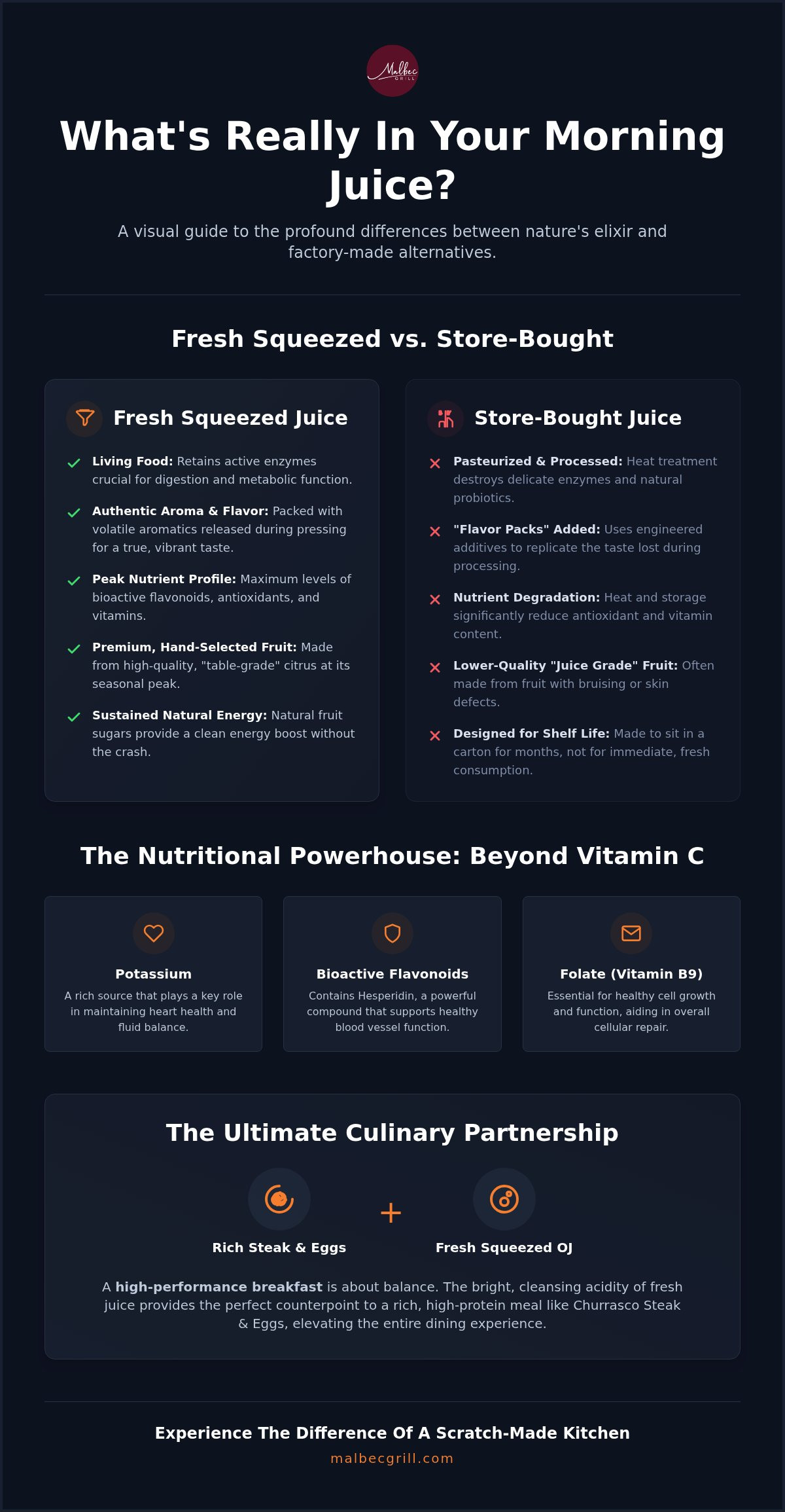
While most associate citrus with Vitamin C, the nutritional landscape of fresh juice is far more intricate. It's a rich source of potassium for heart health and folate for cellular repair. Most importantly, it contains bioactive flavonoids that processed juices struggle to preserve. Hesperidin is a powerful bioactive flavonoid that helps support healthy blood vessel function and overall cardiovascular wellness. When comparing antioxidant capacity, raw juice significantly outperforms pasteurized versions. The heat used in industrial processing often degrades these fragile compounds, leaving you with a shadow of the fruit's original potential. Choosing scratch-made ensures you're receiving the full spectrum of nature's design.
The Psychological Wake-Up Call
The benefits extend beyond the physical. The simple scent of fresh citrus zest can trigger immediate mental alertness, acting as a natural alarm clock for the brain. It's a romantic, sensory ritual that sets a positive tone for the entire day. Unlike the jagged spikes and subsequent crashes associated with refined sugars or "juice drinks," the natural fruit sugars in a scratch-made juice provide sustained morning energy. This isn't just about hydration; it's about an elevated dining experience. A vibrant, hand-pressed drink transforms a simple meal into a celebratory event, reminding us that quality and meticulous care are the most important ingredients in any kitchen.
Choosing the Right Citrus: From Florida Valencias to Navels
The quality of a fresh squeezed orange juice breakfast depends entirely on the specimen in the hand of the chef. Every orange variety carries a distinct sugar-to-acid ratio, a biological signature that determines whether the juice will be cloyingly sweet, unpleasantly tart, or perfectly balanced. In South Florida, we're blessed with a front-row seat to the harvest cycle, allowing us to select fruit at the absolute peak of its seasonal expression. Understanding this hierarchy is what separates a mediocre morning drink from a world-class culinary experience.
Industrial juice production often relies on "juice grade" fruit. These are typically specimens with skin defects, internal bruising, or inconsistent sizes that wouldn't survive a grocery store display. While fine for mass-market pasteurization, these oranges lack the structural integrity required for high-end extraction. A scratch-made kitchen prioritizes table-grade fruit with thin rinds and high density. A heavy orange is a juicy orange. If the rind is too thick, you're paying for skin rather than nectar; if it's too pebbly, the oils from the skin might overpower the delicate juice during the pressing process.
Valencia Oranges: The King of Juice
Valencia oranges are widely considered the gold standard for juicing, especially in the Florida sun. They're prized for their remarkably high juice content and a deep, vibrant orange hue that looks stunning in a glass. Their primary harvest window in Florida runs from March through June, providing a sweet reprieve as the weather warms. Unlike other varieties, Valencias lack significant amounts of limonin in their juice. This is a critical detail because limonin is the compound that causes juice to turn bitter when exposed to oxygen. Because of this, Valencia juice remains smooth and sweet long after the first press.
Navel Oranges and Tangerines: Flavor Enhancers
Navel oranges are beloved for their easy peeling and bright flavor, but they require precision in a juice blend. They contain high levels of limonin in the segment membranes. If you don't consume Navel juice within about thirty minutes of pressing, it can develop a sharp, bitter aftertaste. To counter this or to add complexity, experienced kitchens often incorporate tangerines. These smaller fruits add "bright" acidic notes and a floral aroma that elevates the base juice. Quality is often measured on the Brix scale, a refined system used to determine the percentage of dissolved sugar solids in the fruit. A high Brix rating indicates a fruit that has matured perfectly on the tree.
If you're looking for the pinnacle of citrus craft, exploring the breakfast menu at our scratch kitchen reveals how these seasonal variations come to life. We meticulously monitor seed counts and rind thickness to ensure every glass is pure, vibrant, and free from the industrial shortcuts of "juice grade" alternatives. This dedication to the ingredient ensures your fresh squeezed orange juice breakfast is always a highlight of your day.
Fresh Squeezed vs. Store-Bought: The Hidden Truth About Processing
A sixty day expiration date on a carton of "fresh" juice isn't a miracle of modern science; it's a warning sign. When you choose a fresh squeezed orange juice breakfast, you're opting for a beverage that is meant to be consumed in its most vibrant, fleeting state. Industrial juice, even the expensive brands found in the refrigerated aisle, undergoes a grueling journey that strips away the very essence of the fruit. To make juice shelf-stable for months, producers use a process called de-aeration. This involves stripping the liquid of all oxygen to prevent spoilage while it sits in massive million gallon tanks. The problem? This process also removes the natural flavors and aromatic oils that make an orange taste like an orange.
Once the juice is flavorless and sterile, companies "re-flavor" it using engineered flavor packs. These packs are designed by fragrance houses to ensure every carton tastes exactly the same, regardless of the season or the quality of the original fruit. This industrial standardization is the antithesis of the scratch-made philosophy. Beyond the loss of flavor, the heavy pasteurization required for mass distribution uses high heat that effectively kills the delicate enzymes we discussed earlier. It turns a living, functional food into a sugary, processed commodity. Avoiding these shortcuts is central to a health-conscious lifestyle, especially for those who are vigilant about avoiding hidden additives and inflammatory ingredients.
Deconstructing 'Not From Concentrate' Labels
The "Not From Concentrate" label is one of the most successful marketing illusions in the grocery store. It suggests a level of freshness that simply doesn't exist in a factory setting. In reality, this juice can be stored in oxygen-depleted tanks for up to a year before it ever reaches a carton. This long-term storage is why flavor packs are necessary; without them, the juice would taste like nothing more than watered-down sugar. Current labeling laws allow manufacturers to omit "flavor packs" from ingredient lists as long as the chemicals are derived from citrus essences, effectively hiding the industrial nature of the product from the consumer. It's a legal loophole that leaves many diners confused about what they're actually putting into their bodies.
The Additive Problem: Sugar and Preservatives
Industrial producers often standardize their products with synthetic chemicals to maintain a consistent color and mouthfeel. While fresh juice relies on the natural fruit sugars inherent in a ripe Valencia or Navel, processed versions may contain hidden sweeteners to mask the bitterness of low-quality fruit. At Malbec Grill, our commitment to a from-scratch kitchen means we refuse to serve these engineered alternatives. We believe a fresh squeezed orange juice breakfast should be exactly that: juice, squeezed from an orange, with nothing added and nothing taken away. This dedication to purity ensures that you're fueling your morning with authentic nutrients rather than a processed cocktail of "natural" flavors and preservatives.
The Perfect Pairing: Why OJ and Steak & Eggs are a Power Breakfast
In the heart of Argentine culinary tradition, breakfast isn't a quiet affair; it's a robust celebration of fire and flavor. When you sit down to a meal centered around premium proteins, you need a beverage that can stand its ground. A fresh squeezed orange juice breakfast provides the essential acidic brightness that balances the deep, savory intensity of a traditional Parrilla. This isn't just about tradition; it's about a sophisticated interplay of flavors where the vibrant citrus notes act as a natural palate cleanser. The richness of a perfectly marbled steak and the creamy texture of farm-fresh eggs can be heavy, but the bright, sharp notes of raw orange juice cut through that richness, resetting your taste buds with every sip.
There's also a functional benefit to this combination that many diners overlook. The natural organic acids in fresh citrus, particularly citric and malic acids, assist the stomach in breaking down complex animal proteins. This makes a high-protein start to the day feel lighter and more manageable, providing sustained energy without the lethargy often associated with processed morning meals. For Parkland locals seeking a high-performance meal, this pairing is the ultimate "Power Breakfast" that fuels both the body and the mind.
Vitamin C and Iron Absorption
The relationship between citrus and meat is a biological win for your health. Vitamin C, or ascorbic acid, acts as a powerful catalyst for nutrient uptake, specifically enhancing the absorption of iron found in beef and eggs. When you enjoy a steak and eggs breakfast Parkland style, the raw juice ensures you're getting the maximum benefit from your meal. Research indicates that consuming Vitamin C alongside iron-rich foods can increase the absorption of non-heme iron by as much as 67 percent, ensuring your body efficiently utilizes the minerals you're consuming.
Balancing the Savory Argentine Grill
The subtle sweetness of a hand-pressed Valencia juice offers a romantic counterpoint to the smoky, charred notes of the grill. It's a harmony of opposites that defines the experience at our scratch made kitchen Parkland, where we prioritize the purity of every ingredient. Because we strictly avoid inflammatory seed oils in all our preparations, this fresh squeezed orange juice breakfast remains a clean, low-inflammation choice. We focus on this specific pairing because it represents the pinnacle of our "from-scratch" philosophy: honest food, prepared with precision, designed to make you feel your best.
Ready to experience this power pairing for yourself and feel the difference of a truly scratch-made meal? Reserve your table at Malbec Grill and discover why real citrus is the only way to start your morning.
The Malbec Grill Difference: Fresh Squeezed in Parkland & Boca
While most establishments rely on the convenience of industrial cartons, we believe the morning deserves a higher standard of care. At Malbec Grill, the ritual of the fresh squeezed orange juice breakfast begins long before our first guest arrives. Every morning, our scratch-made kitchen team hand-selects the finest local Florida citrus, ensuring that the juice in your glass was still inside the fruit just moments ago. This isn't just about beverage service; it's a commitment to the "living food" philosophy we've explored throughout this guide. By pressing our juice in-house, we preserve the delicate enzymes and volatile aromatics that define real citrus, providing a level of purity that simply cannot be found in a processed alternative.
Our dedication to quality extends far beyond the juicer. We understand that our guests in Parkland and West Boca are increasingly vigilant about what they consume, which is why we offer a strict "no seed oil" guarantee across our entire breakfast menu. In an industry where processed fats and industrial shortcuts are the norm, we choose the difficult path of scratch-made preparation. We believe that true value isn't found in the lowest price, but in providing premium, health-conscious ingredients at an honest price. It's a philosophy that respects both the traditions of the Argentine grill and the well-being of our community.
A Health-First Approach to Argentine Dining
As a family-owned destination, our ingredient choices are dictated by a simple rule: if we wouldn't serve it to our own family, we won't serve it to yours. This "real food" mandate is what makes us the best value steakhouse South Florida has to offer. We bridge the gap between the rustic, smoky soul of the Parrilla and the clean, vibrant needs of a modern diet. Whether you're here for our handmade empanadas or a signature steak and eggs pairing, you can trust that every element has been crafted without hidden additives or factory-made fillers.
Join Us for Breakfast
When you join us for a fresh squeezed orange juice breakfast, expect more than just a drink. Expect a glass filled with the golden hue of the Florida sun and a floral aroma that awakens the senses. Our doors are open to diners from Parkland, Coconut Creek, and Coral Springs who refuse to settle for the "flavor pack" reality of modern dining. We invite you to experience the difference that a truly scratch-made kitchen makes. Come taste the vibrancy of real citrus and the passion of Argentine hospitality, and see why we believe that real food is the only way to start your day.
Embrace the Vibrancy of Real Citrus
Choosing a fresh squeezed orange juice breakfast is more than a simple culinary preference; it's a profound commitment to your body's morning performance. You've discovered that real juice is a living food, teeming with active enzymes and delicate aromatics that industrial heat treatment inevitably destroys. By rejecting the engineered "flavor packs" of store-bought cartons and embracing the natural acidity that aids digestion, you transform a standard meal into a sophisticated health ritual.
At Malbec Grill, we've spent over 25 years as a family-owned and operated sanctuary for guests who value transparency and purity. Our scratch-made kitchen strictly avoids inflammatory seed oils and processed shortcuts, ensuring every glass reflects our dedication to your well-being. We're proud to serve the Parkland, West Boca, and Coconut Creek communities with honest, vibrant flavors that respect both Argentine tradition and modern nutrition. Experience the freshest breakfast in Parkland—Visit Malbec Grill Today! We look forward to welcoming you to our table and sharing the sun-drenched essence of Florida citrus at its absolute peak.
Frequently Asked Questions
Is fresh squeezed orange juice healthier than store-bought?
Yes, raw juice is significantly healthier because it bypasses the industrial pasteurization that kills delicate enzymes and heat-sensitive nutrients. While store-bought options rely on de-oxygenated storage and synthetic flavor packs, a fresh squeezed orange juice breakfast provides living nutrients in their most bioavailable form. This purity ensures you receive the full spectrum of the fruit's natural antioxidants without the hidden preservatives found in factory-made alternatives.
Does fresh orange juice lose its vitamins if it sits out?
Vitamin C begins to degrade as soon as the juice is exposed to oxygen and light. To receive the maximum nutritional benefit, it's best to consume the juice within twenty to thirty minutes of pressing. While the juice remains delicious for several hours, the peak of its enzymatic activity and vitamin potency is fleeting. This is why our scratch-made kitchen prepares every glass immediately upon order rather than letting it sit.
Why does some orange juice taste bitter?
Bitterness typically occurs due to a compound called limonin, which is highly concentrated in the membranes of certain varieties like Navel oranges. When these oranges are pressed, the limonin is released and becomes increasingly bitter as it sits. Bitterness can also result from using "juice grade" fruit that has been over-processed or includes too much of the white, bitter pith during the extraction process.
What are the best oranges for juicing in Florida?
Valencia oranges are the undisputed champions of Florida citrus for juicing due to their high juice content and lack of bitterness-inducing limonin. During the winter months, Navels provide a bright, sweet alternative for immediate consumption. We always look for thin-skinned, heavy fruit from local groves. These characteristics indicate a higher sugar-to-acid ratio and a more refined flavor profile for your morning glass.
Can I drink orange juice if I'm on a low-inflammation diet?
Raw, additive-free orange juice is a functional addition to a low-inflammation diet when consumed in moderation. Unlike processed juices that may contain hidden sugars or are served alongside foods cooked in inflammatory seed oils, our fresh squeezed orange juice breakfast is a clean, whole-food choice. The bioactive flavonoids like hesperidin found in real citrus actually support vascular health and help combat systemic inflammation.
Does Malbec Grill use any additives in their breakfast juice?
Malbec Grill never uses additives, preservatives, or artificial sweeteners in any of our juice preparations. Our commitment to a 100% scratch-made kitchen means that the only ingredient in your glass is the juice of hand-selected Florida oranges. We believe in the purity of the ingredient, ensuring that your breakfast remains free from the industrial shortcuts and chemicals found in mass-produced, shelf-stable alternatives.
How much Vitamin C is in a glass of fresh squeezed OJ?
A standard eight-ounce glass of raw, hand-pressed orange juice typically contains approximately 124 milligrams of Vitamin C. This amount exceeds the daily recommended intake for most adults, providing a powerful boost to the immune system. Because this vitamin is in its raw, unheated state, your body can absorb it more efficiently than the synthetic versions often added back into pasteurized store-bought cartons.
Why is fresh juice more expensive than concentrate?
Fresh juice carries a higher cost because it requires significantly more fruit and intensive labor compared to industrial concentrates. It takes several pounds of premium, table-grade oranges to produce a single carafe, and the process involves meticulous cleaning and manual pressing. Unlike concentrate, which is a mass-produced commodity designed for long-term storage, real juice is a perishable, high-quality product that prioritizes nutrient density over shelf life.


Comments